Iron Before Pregnancy: Why It Matters for Fertility and Early Pregnancy
Iron is important before and during pregnancy. Learn why iron stores matter, how ferritin testing can help, and when supplements may be needed.

If you are trying to conceive, you may already be thinking about folic acid, prenatal vitamins, and nutrients that support early pregnancy.
Iron deserves a place in that conversation.
Iron helps carry oxygen throughout the body and supports energy production, cell growth, reproductive health, and pregnancy. Iron needs also increase during pregnancy, which makes the preconception period a helpful time to understand your iron status.
The important thing to know is that iron needs are individual. Some people need more iron, while others do not. This is why testing, food intake, symptoms, and medical history all matter.
For a broader overview of nutrients to prioritize before pregnancy, read Key Nutrients for Fertility: What to Focus on Before Pregnancy.
Looking for help choosing a prenatal vitamin?
Download the Prenatal Vitamin Starter Guide to learn which nutrients to look for, how to compare products, and what questions to ask before pregnancy.
Why Iron Matters Before Pregnancy
Iron plays an important role before and during pregnancy.
During pregnancy, iron is needed to support:
- The developing baby
- The placenta
- Increased blood volume
- Oxygen transport throughout the body
Because iron requirements increase during pregnancy, identifying and addressing low iron stores before conception may help support nutritional readiness for pregnancy.
Can You Have Low Iron Without Anemia?
Yes. Many people assume that if they are not anemic, their iron status must be adequate. However, iron stores can become low before anemia develops.
One way healthcare providers assess iron stores is through a blood test called ferritin. Ferritin reflects stored iron and may become low before changes appear on a complete blood count (CBC).
This is one reason it may be helpful to discuss iron testing with your healthcare provider when preparing for pregnancy, especially if you have symptoms or risk factors for low iron.
Can Low Iron Affect Fertility?
Researchers continue to study the relationship between iron status and fertility.
Some studies suggest that low iron stores may be associated with fertility challenges and pregnancy outcomes. However, fertility is complex, and iron is only one piece of the picture.
Low iron stores do not necessarily explain difficulty conceiving, and correcting an iron deficiency does not guarantee pregnancy. Still, identifying and addressing iron deficiency before pregnancy may help support overall health, nutritional status, and reproductive health.
What Causes Low Iron?
There are many possible causes of low iron stores.
Common examples include:
- Heavy menstrual periods
- Inadequate dietary iron intake
- Vegetarian or vegan diets
- Gastrointestinal conditions that affect nutrient absorption
- Increased iron requirements
- Frequent blood donation
If low iron is identified, it is important to understand why it occurred. This can help guide the right treatment plan and reduce the chance of low iron returning.
Foods That Provide Iron
Iron is found in both animal and plant foods.
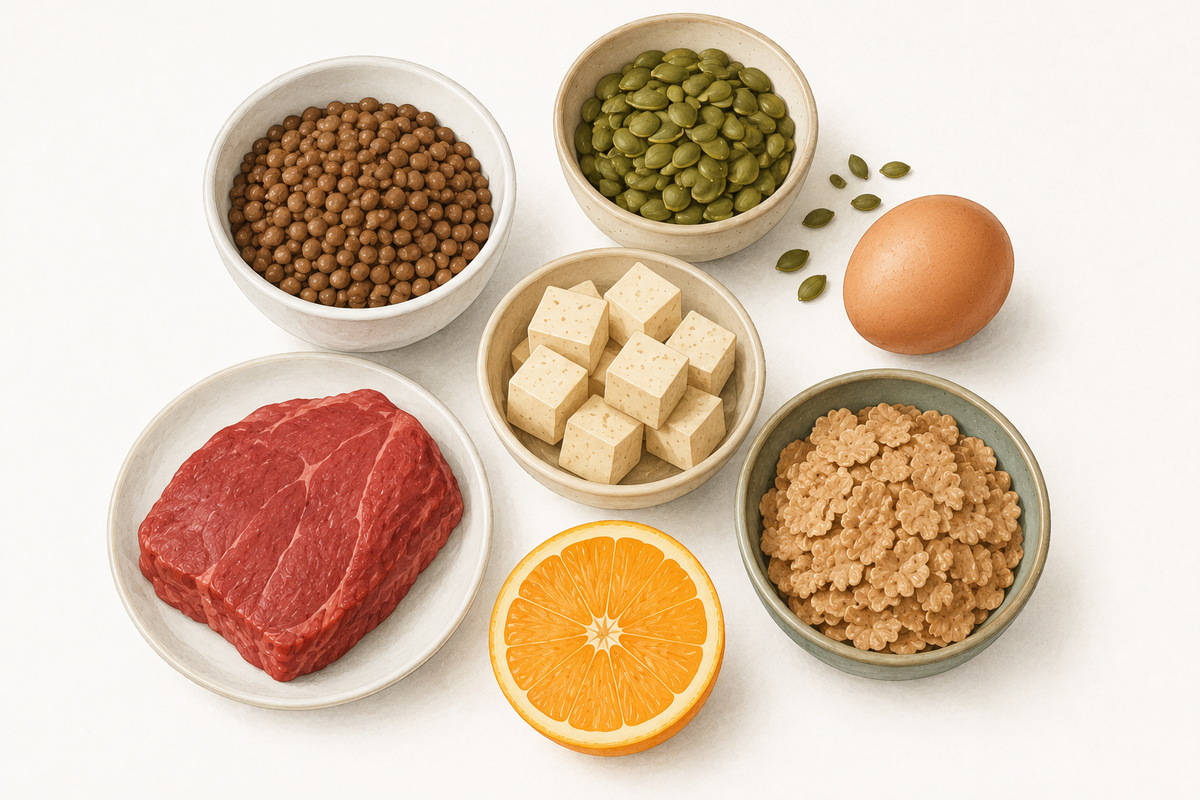
Animal foods provide heme iron, which is generally absorbed more efficiently by the body. Sources include:
- Beef
- Lamb
- Poultry
- Seafood
Plant foods provide non-heme iron, which is absorbed less efficiently than heme iron but can still make an important contribution to iron intake. Sources include:
- Beans and lentils
- Tofu
- Pumpkin seeds
- Spinach
- Iron-fortified cereals
- Whole grains
Vitamin C can help improve the absorption of non-heme iron. Pairing iron-rich plant foods with foods such as citrus fruits, strawberries, bell peppers, or tomatoes may help your body absorb more iron.
Examples include:
- Lentil soup with tomatoes
- Tofu stir-fry with bell peppers
- Iron-fortified cereal with strawberries
- Beans with salsa or citrus
- Spinach salad with citrus vinaigrette
Should You Take an Iron Supplement?
Not everyone trying to conceive needs an iron supplement.
Some prenatal vitamins contain iron, while others do not. The amount can also vary. If you have low iron stores, a prenatal vitamin alone may not provide enough iron to correct a deficiency. To learn more, read How to Choose a Prenatal Vitamin When Trying to Conceive.
At the same time, more iron is not always better. Too much supplemental iron can cause side effects and may be harmful for some people.
Iron supplements are typically recommended based on blood work, symptoms, dietary intake, medical history, and individual health needs. Before starting an iron supplement, discuss your needs with your healthcare provider.
Key Takeaway
Iron is an important nutrient before and during pregnancy. Because iron stores can become low before anemia develops, some people may benefit from discussing iron testing with their healthcare provider when planning a pregnancy.
Iron is only one part of fertility and preconception health, but identifying and addressing low iron before pregnancy may help support energy, nutritional status, reproductive health, and readiness for pregnancy.
Looking for help choosing a prenatal vitamin?
Download the Prenatal Vitamin Starter Guide to learn which nutrients to look for, how to compare products, and what questions to ask before pregnancy.
Disclaimer: This article is for general educational purposes and is not a substitute for individualized medical, nutrition, or mental health care. Nutrition needs and fertility care vary based on health history, symptoms, medications, laboratory results, pregnancy status, and treatment plans. Discuss concerns, testing, diagnoses, and any changes to medications, supplements, or treatment with an appropriate healthcare professional.