Taking a GLP-1 and Thinking About Pregnancy? Start Here
Taking a GLP-1 and hoping to get pregnant? Here’s when to stop, how to avoid a surprise pregnancy, and which nutrients may run low.


If you take a glucagon-like peptide-1 (GLP-1) medicine like semaglutide (Ozempic, Wegovy) or tirzepatide (Mounjaro, Zepbound), and you hope to get pregnant, this one is for you.
GLP-1 medicines are not a fertility treatment. Some people start them to meet a body mass index (BMI) cutoff before in vitro fertilization (IVF), though there is limited evidence that losing weight before IVF improves the chance of a live birth. Others become pregnant by surprise.
Either way, the months before pregnancy matter. Here is what to know and how to prepare.
Why timing matters
GLP-1 medicines are not recommended during pregnancy, so they need to be stopped before you start trying. The American College of Obstetricians and Gynecologists (ACOG) advises stopping them 1 to 2 months before trying to conceive. The timing depends on the medicine. For example, semaglutide labels (Ozempic, Wegovy) say at least 2 months. Your healthcare provider will tell you the right timing for your medicine.
There is another reason to plan ahead. Your eggs mature over about 3 months before ovulation, and good nutrition supports your body during that time.
GLP-1 use around pregnancy has risen sharply. In one US study, prescriptions in the year before delivery rose about 30-fold from 2019 to 2024. Some people may still be taking one in the months before they conceive. That time may overlap with eating less, and less food can mean fewer nutrients, right when your body is building its stores for pregnancy.
Surprise pregnancies happen
As weight changes, ovulation can return, especially in people with polyendocrine metabolic ovarian syndrome (PMOS), the new name for polycystic ovary syndrome (PCOS). You could get pregnant sooner than you expect.
Use effective birth control while you take a GLP-1, and keep using it after your last dose until your healthcare provider says it is time to start trying. On tirzepatide (Mounjaro, Zepbound), the pill may work less well for 4 weeks after starting and after each dose increase, so add condoms or ask about a non-pill method.
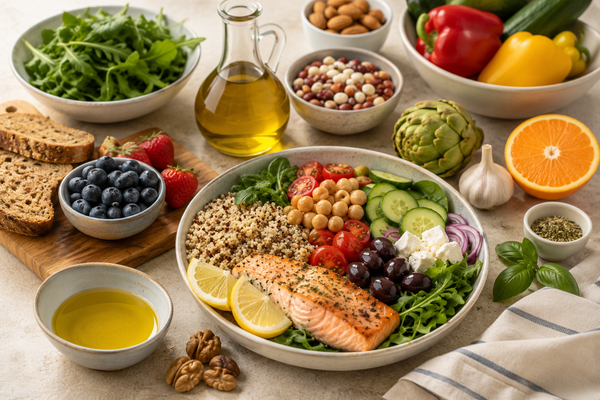
Ready to conceive? Work with your healthcare provider on a plan to stop your medicine, start a prenatal vitamin with folic acid, and get your nutrition on track with the Fertility Plate.
Positive pregnancy test while taking a GLP-1? Call your healthcare provider the same day, before your next dose. Most people will be told to stop the medicine. If you take it for type 2 diabetes, keep checking your blood sugar and ask for a new plan right away. Many people switch to insulin, because steady blood sugar matters in early pregnancy. So far, studies have not found a consistent link between GLP-1s and birth defects, though research is still limited.
Nutrients that may run low
GLP-1 medicines quiet your appetite. Eating less can help with weight loss, and it can also mean fewer nutrients. Nutrients that may run low include:
- Iron, especially if you eat little red meat or have heavy periods (more on iron)
- Zinc, found in meat, seafood, beans, and seeds
- Vitamin B12, found in animal foods
- Vitamin D, especially with little sun or few fortified foods
- Protein, which may help you keep muscle while losing weight
Everyone is different. What you need depends on what you eat, how long you took the medicine, and your health history.
What you can do now
- Plan ahead with your healthcare provider. If you hope to get pregnant, ask when to stop your medicine and what birth control to use until it is time to start trying. If you take a GLP-1 for diabetes, plan several months ahead, since it can take time to reach your blood sugar goals on a pregnancy-safe plan.
- Start a prenatal vitamin with folic acid. Begin at least a month before trying. Most people need 400 to 800 micrograms of folic acid a day. Some need more, including people with a past pregnancy affected by a neural tube defect or who take certain seizure medicines. Some guidelines also suggest more for people with diabetes, a higher BMI, or past weight loss surgery. Ask a Registered Dietitian or your healthcare provider what is right for you.
- Ask about lab tests. A ferritin test checks your iron stores. Your healthcare provider may also check vitamin B12 or vitamin D.
- Build balanced plates. Even with a small appetite, aim for protein, colorful plants, whole grains, and healthy fats at most meals.
- Be gentle with yourself as appetite returns. Hunger and "food noise" often come back after stopping. That is normal. Regular, balanced meals can help you feel steady.
- Stay close with your prenatal care team. In one study, people who stopped a GLP-1 before or early in pregnancy were more likely than people who had never taken one to gain more weight than recommended (65% compared with 49%). They also had higher rates of gestational diabetes, high blood pressure, and early delivery. This does not prove that stopping caused these problems, but early and regular medical checks may help.
The bottom line
If you take a GLP-1, the months before pregnancy deserve extra care: coordinate a plan with your healthcare provider, protect against surprise pregnancies, and rebuild your nutrition before trying to conceive.
Want a simple place to start? Download the free Fertility Plate guide for an easy way to build balanced meals.
This article is for education only and is not medical advice. Talk with your healthcare provider before starting or changing any medicine.
Sources
- Mozaffarian D, et al. Nutritional Priorities to Support GLP-1 Therapy for Obesity. Am J Clin Nutr. 2025;122:344-367. doi:10.1016/j.ajcnut.2025.04.023
- Wyckoff JA, et al. Preexisting Diabetes and Pregnancy: An Endocrine Society and European Society of Endocrinology Joint Clinical Practice Guideline. J Clin Endocrinol Metab. 2025. doi:10.1210/clinem/dgaf288
- American College of Obstetricians and Gynecologists. Use of Glucagon-Like Peptide-1 Receptor Agonists in Pregnancy and Lactation. Practice Advisory. October 2026.
- Maya J, et al. Gestational Weight Gain and Pregnancy Outcomes After GLP-1 Receptor Agonist Discontinuation. JAMA. 2025. doi:10.1001/jama.2025.20951
- Michalopoulou M, et al. The Effect of Weight Loss Before In Vitro Fertilization on Reproductive Outcomes in Women With Obesity: A Systematic Review and Meta-analysis. Ann Intern Med. 2025. PMID: 40789178
- Wegovy (semaglutide) injection. Prescribing information. Novo Nordisk; 2026.
- US Preventive Services Task Force. Folic Acid Supplementation to Prevent Neural Tube Defects: Recommendation Statement. JAMA. 2023;330(5):454-459.
- Ozempic (semaglutide) injection. Prescribing information. Novo Nordisk.
- Teede HJ, et al. Polyendocrine metabolic ovarian syndrome, the new name for polycystic ovary syndrome: a multistep global consensus process. Lancet. 2026;407(10545):2329-2339. doi:10.1016/S0140-6736(26)00717-8
- American Diabetes Association Professional Practice Committee. Management of Diabetes in Pregnancy: Standards of Care in Diabetes 2026. Diabetes Care. 2026;49(Suppl 1).
- Zepbound and Mounjaro (tirzepatide) injection. Prescribing information. Eli Lilly; 2026.
- GLP-1s and Pregnancy: Nutrition Before You ConceiveLessard C, et al. Prescribing Trends in Glucagon-Like Peptide-1 Medications Among Pregnant and Postpartum Persons. Obstet Gynecol. 2026. PMID: 41505759